
Ivy Daitch - April 5, 2026 - five-minute read
Dayenu for Nachshon Ben Aminadav
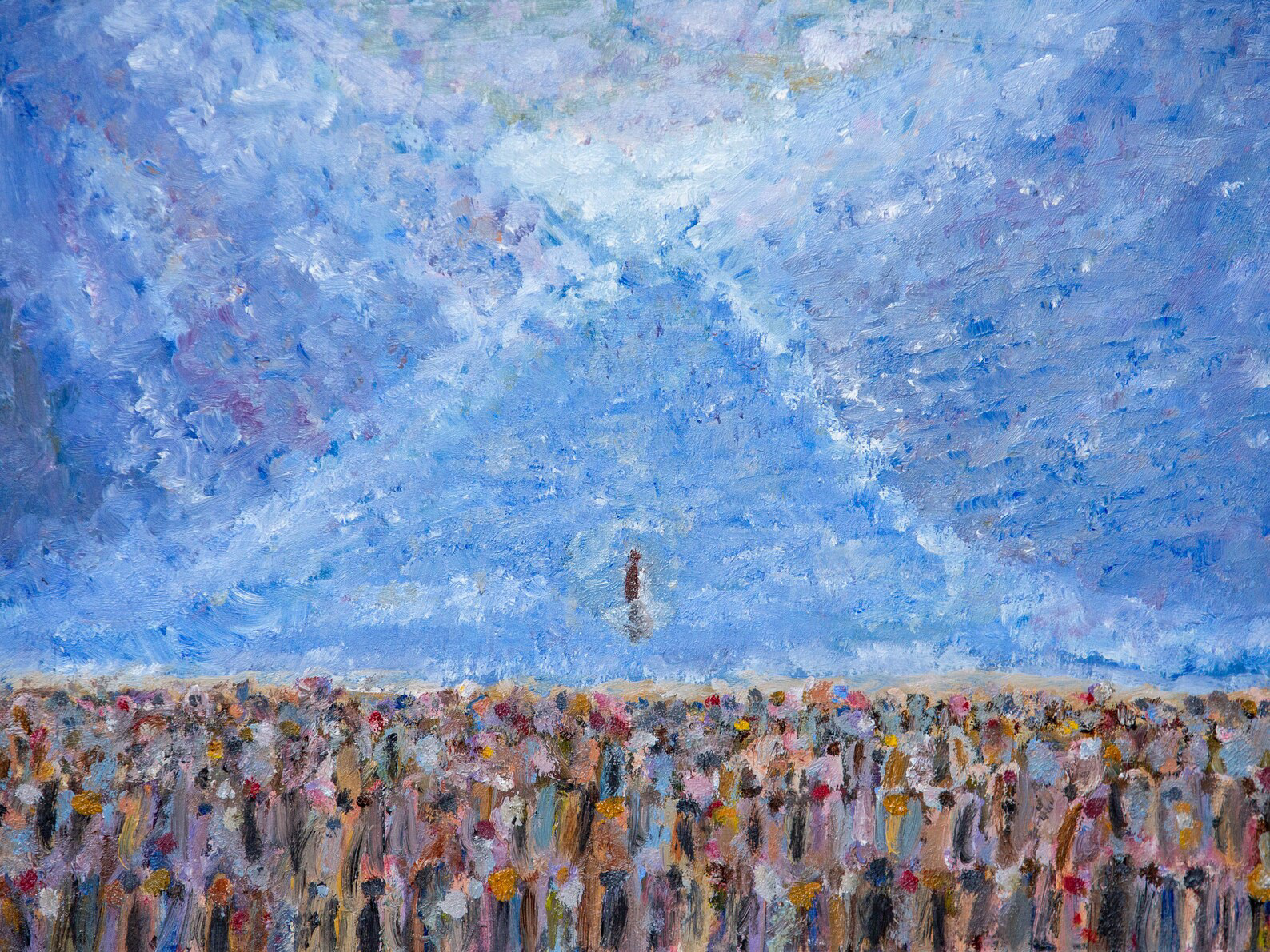
"Hero Nachshon ben Aminadav Entering First" by YoelKoskasFineArt
As the fifth day of Passover comes to an end, Jews across the diaspora are chametz-free, craving challah french toast and reflecting on the festivities of the Pesach seder from a few days before. Passover is one of the most widely celebrated holidays across Jewish sectors. Every year, families gather for a seder filled with food, a hunt for the afikomen, a rewatch of the Prince of Egypt (currently streaming on Peacock) and the beloved seder story of the Jews getting emancipated from Egyptian slavery (#LetMyPeopleGo).
For me, the annual Passover seder holds so many joyful memories of throwing plastic frogs at my brother, tearing up the couch looking for the afikomen, asking the four questions/Mah Nishtanah and of course singing songs. Whether it's "Dayenu", "Mi Chamocha," or "Eliyahu Hanavi," the Jewish diaspora voices a choir of gratitude to G-d for freeing us from Egypt and letting us cross the Red Sea. My four questions for this Passover themed-post are:
1. When did the Red Sea part?
2. How did the Red Sea part?
3. Why do we say the "Mi Chamocha" every week?
4. Why is the Red Sea important in Judaism today?
When people think of the Red Sea parting, most people immediately think of Moses, Miriam and Aaron. But the miracle of freedom wouldn't have happened if one person hadn't jumped faith first into the sea for G-d. Who is that man, you ask? Everyone, thank Nachshon Ben Aminadav (נחשון בן עמינדב).
Nachshon Ben Aminadav, an ancestor of the future King David and brother-in-law to Aaron, was a prince of the tribe of Judah. According to the Torah, the Israelites had been traveling for seven days when they approached the raging red sea. "Speak to the people of Israel; they shall travel" (Exodus 14:15). With the sea ahead of them, many Israelites feared the order, but not Nachshon Ben Aminadav. A firm believer in G-d, he jumped into the sea and started chanting the "Mi Chamocha." At that moment, G-d spoke to Moses and asked him, "why was he was letting his people drown?" Then he commanded Moses to raise his staff, spread his hand over the sea and the sea would split. Moses did as he commanded, and as foretold, the sea parted, allowing the Israelites to continue on to the land of Milk and Honey.
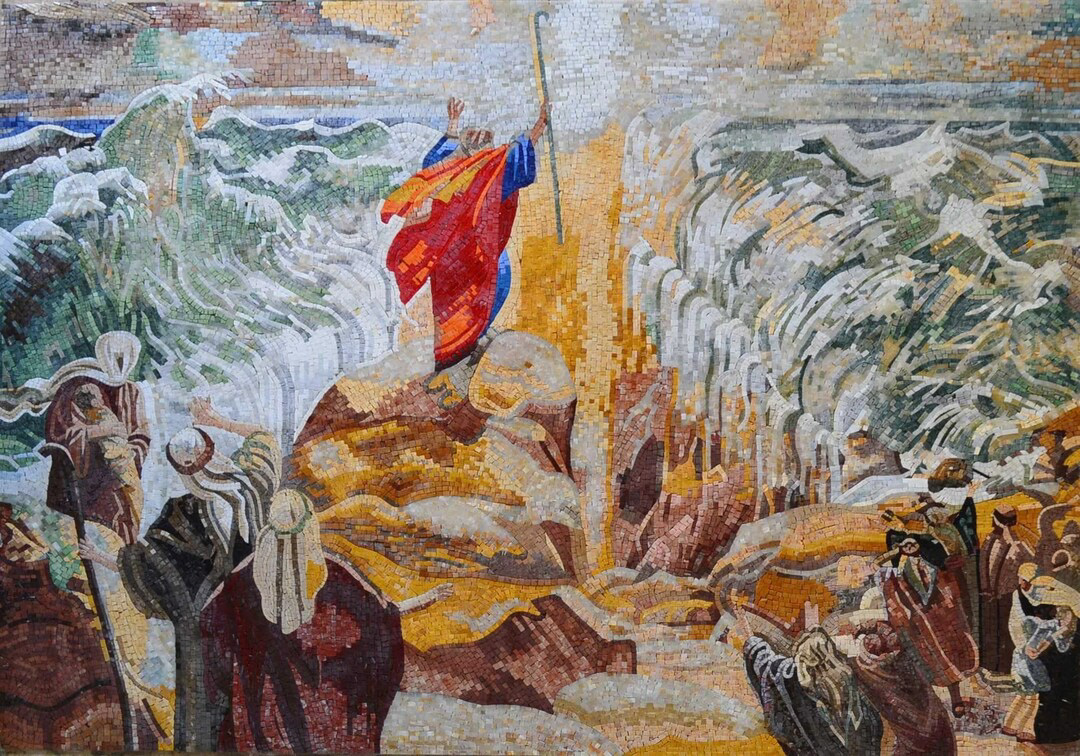
Moses Mosaic Parting the Red Sea by Mozaico
Today, we honor the bravery, courage and initiative of Nachshon Ben Aminadav by reciting the "Mi Chamocha" every Shabbat. After the crossing, Nachshon Ben Aminadav became an elder. He was honored during the dedication of the Tabernacle by being the first to present his offering:
"GOD said to Moses: Let them present their offerings for the dedication of the altar, one chieftain each day. The one who presented his offering on the first day was Nahshon son of Amminadab of the tribe of Judah. His offering: one silver bowl weighing 130 shekels and one silver basin of 70 shekels by the sanctuary weight, both filled with choice flour with oil mixed in, for a grain offering; one gold ladle of 10 shekels, filled with incense; one bull of the herd, one ram, and one lamb in its first year, for a burnt offering; one goat for a purgation offering;…" (Numbers 7:11-17)
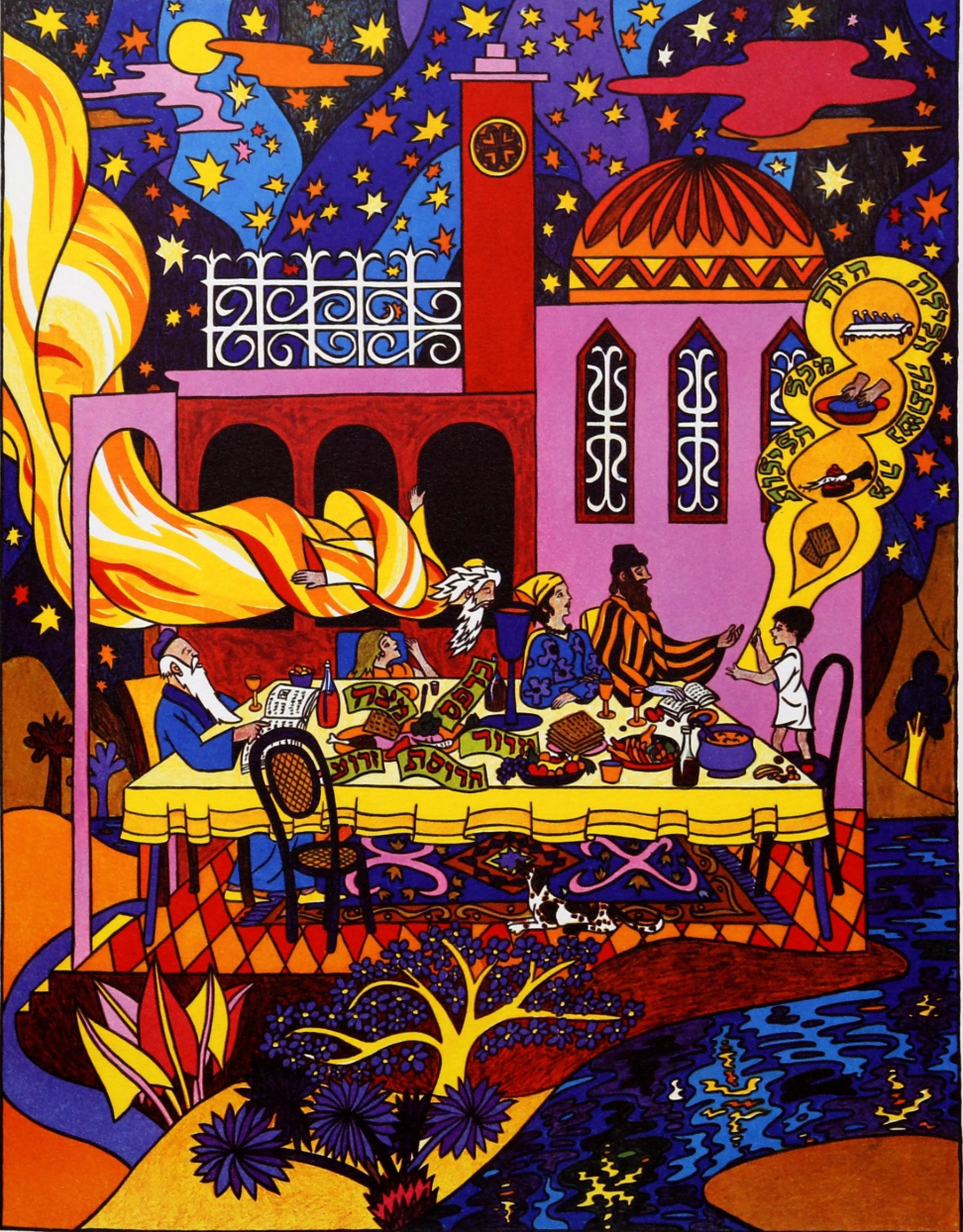
Haggadah of Passover by Shlomo Katz
As we celebrate Passover this year, let's remember not only the courage of the Israelites who left their homes in search of a better, freer future, but also remember to honor the man who was the first to take a leap of faith into the sea.
As Jews, we strive to constantly better the world (Tikkun Olam) and practice Ometz Lev (bravery and courage). I challenge my readers to take this holiday to reflect on moments when they have been the first to show faith and courage. How will you mentally prepare to act as Nachshon Ben Aminadav did?
Chag Pesach Sameach! And as we've said for centuries on this holiday, next year in Jerusalem!